Semi Truck Hood Damage: When to Repair vs. Replace

A damaged semi-truck hood immediately halts your revenue stream, forcing a critical decision between a potentially lengthy repair and a pricey full replacement.
You can choose the most cost-effective way to get your truck back on the road when you accurately assess the hood's structural damage, consider any hidden mechanic shop fees, and calculate the total downtime cost (e.g., money lost from the truck sitting in the repair shop or waiting for a new hood shipment).
Repair Total = Labor + materials + reinforcement + hardware + paint + downtime
Replacement total = Hood + freight + paint + transferred parts + installation + downtime
While a replacement hood often carries a higher upfront price tag, the faster installation time can make it the cheaper option overall by drastically reducing your lost driving revenue (downtime).
Evaluating the Damage: A Diagnostic Checklist

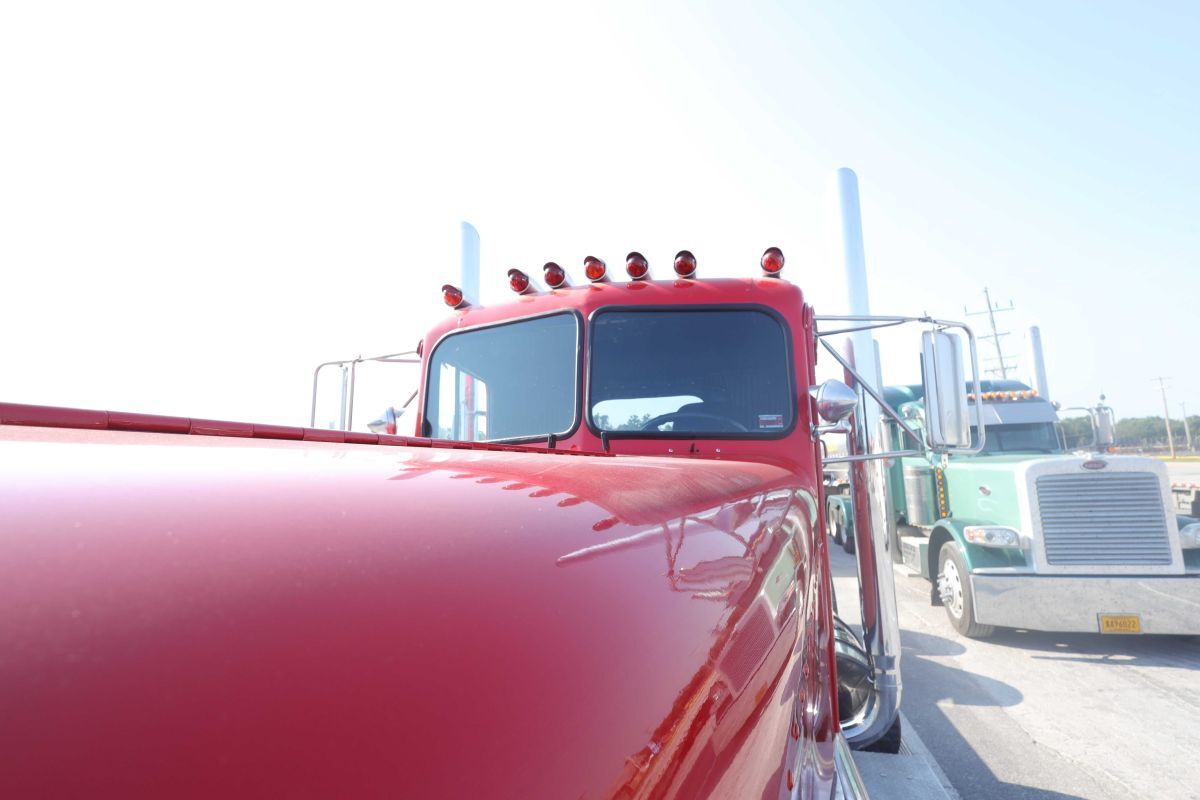
After a front-end collision to the hood, inspect it.
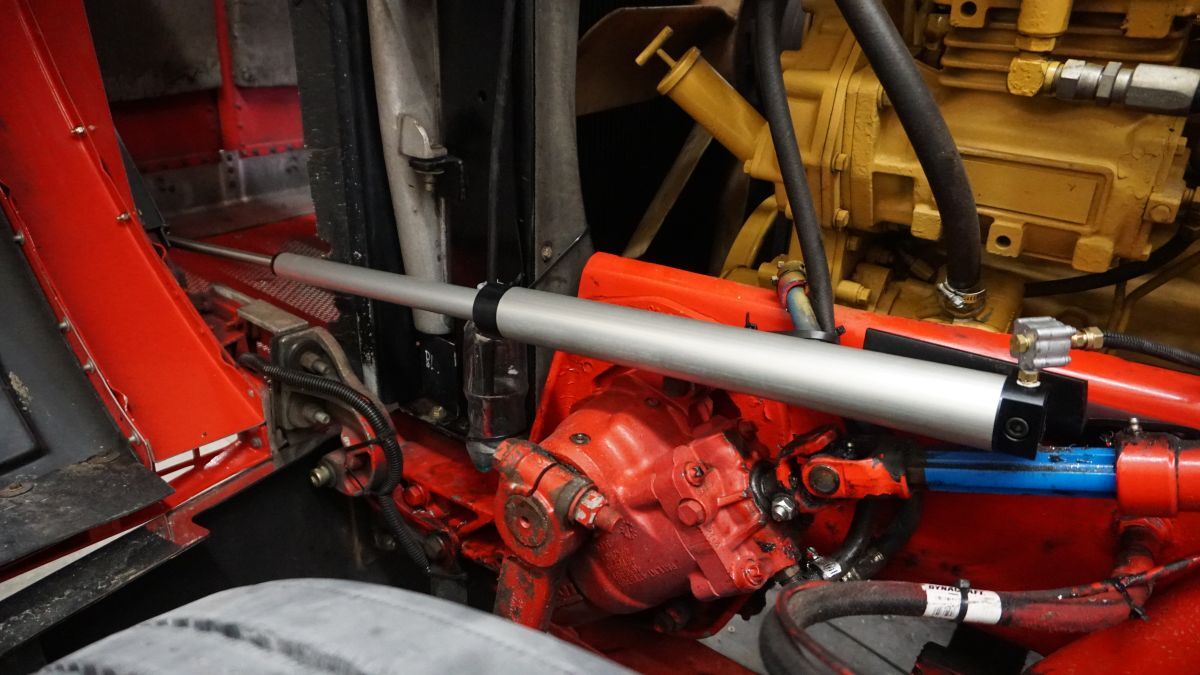
It's common to have hidden collision damage beneath the hood's impact point, including parts nested deep in the front-end: the fan shroud, radiator, A/C condenser, or air intake.
Hidden Damages to Hood Parts

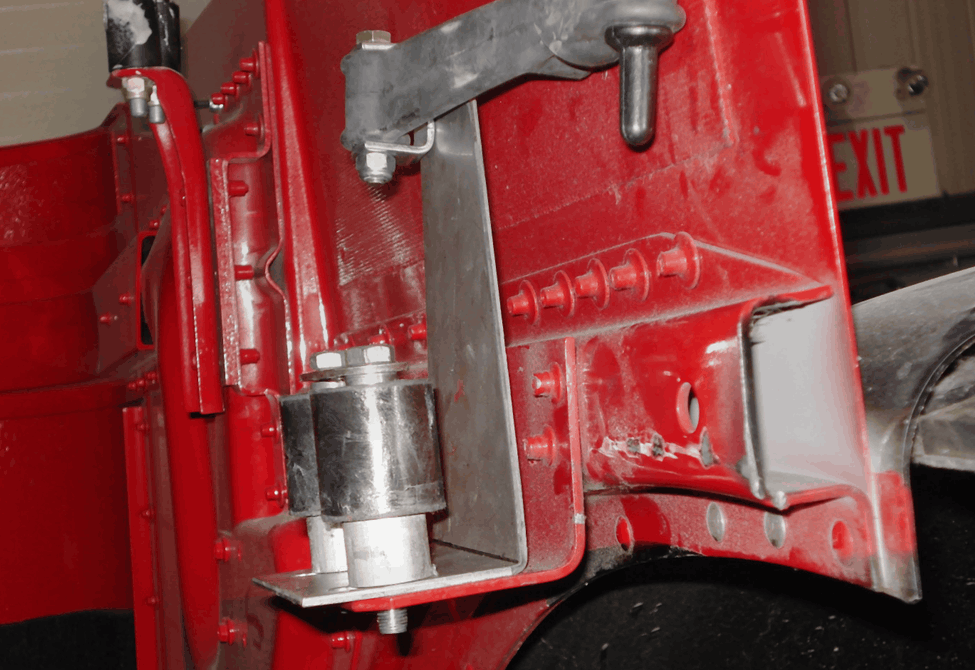
Here are some examples of a concealed Peterbilt 379 long-hood latch assembly that includes hood alignment hardware and vibration isolators.
Semi truck hoods have dozens of small hardware pieces that are difficult to spot on first glance:
- Hood-mounted support brackets
- Rubber isolation mounts
- Spring-steel latch arms
- Hooked catch mechanisms
- Adjustable mounting points
If and when a fiberglass hood is damaged after an animal strike or vehicle collision, most of the hood hardware, be it hidden or exposed, will probably need to be replaced.

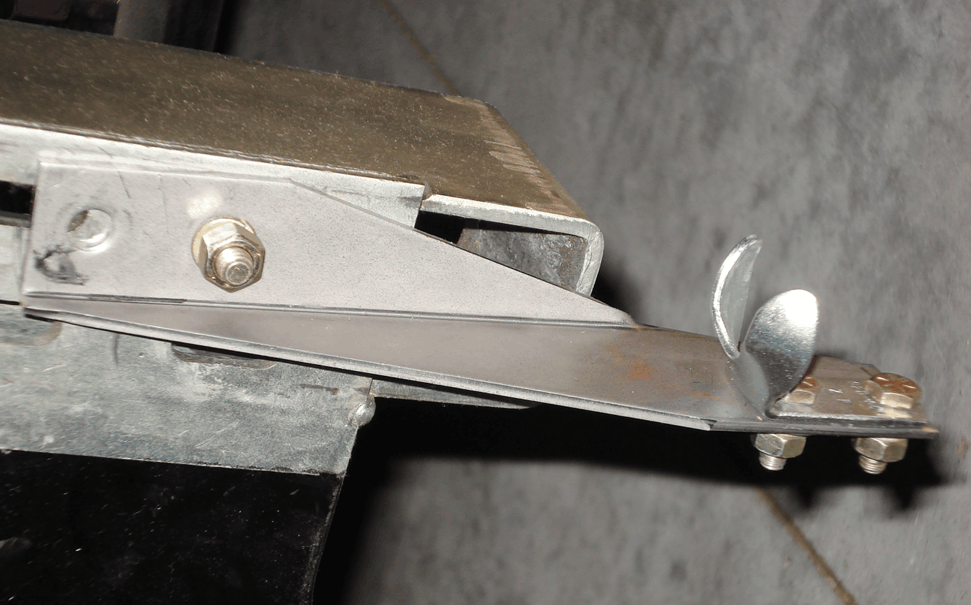
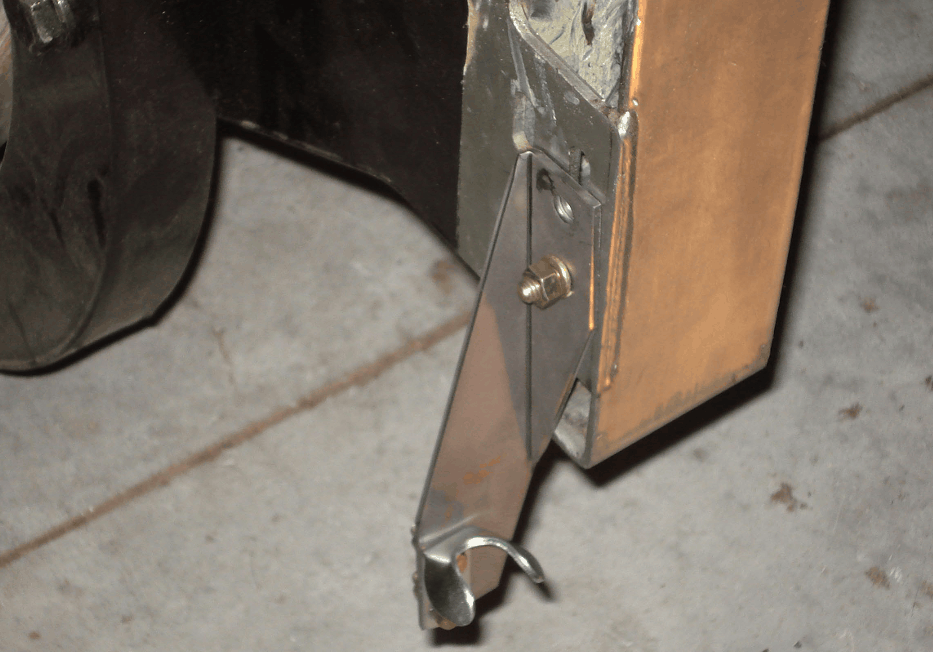
In this image, the hooked tip of the latch arm is designed to engage a hidden striker (A.K.A. hood latch kit) or retaining point along the truck frame.
Correcting Post-Collision Hood Alignment
Minor positioning and alignment corrections can be done relatively easily with some aftermarket hood repair hardware, like a hood hinge repair kit or a new set of latches.
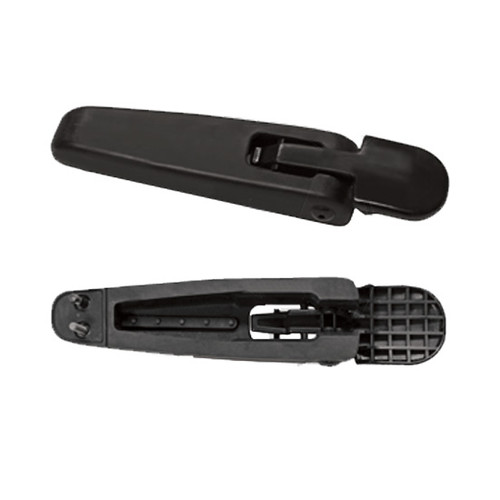
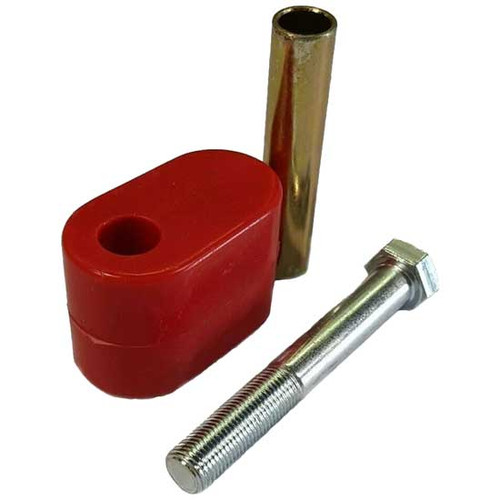
If you notice the hood sagging, vibrating on the highway, flexing excessively, or sitting with uneven gaps and difficult latching, you are likely dealing with deeper structural damage rather than a simple cosmetic fix.
Signs You Should Repair the Hood:
- Damage is localized: You are dealing with minor hairline cracks, small punctures, shallow gelcoat damage, or minor edge damage.
- Mounts are safe: The damage is isolated and kept well away from structural mounting areas.
- Structure is sound: The fiberglass remains firm, and the inner reinforcements are solid.
- Fitment is true: The hood still opens, closes, latches correctly, and aligns evenly.
Signs You Should Replace the Hood:
- Damage is widespread: Fractures span across major panels, affect multiple sections, or feature widespread spider cracking.
- Mounts are compromised: Cracks have reached the hinges, latches, brackets, or reinforcement panels.
- Material is failing: Fasteners are pulling through the material, or the fiberglass feels soft, spongy, and delaminated.
- Structure has shifted: The main shell has twisted, resulting in uncorrectable alignment issues.
- History of failure: Previous structural repairs to the fiberglass continue to crack or fail.
Calculating the True Cost: Parts, Labor, and Downtime
Avoid comparing the cost of a repair directly against the bare price of a new hood—that will give you an inaccurate picture.
Instead, compare the total repair cost with the complete installed replacement cost.
A vital factor in this calculation is downtime (calculated as your average daily net revenue multiplied by inactive workdays).
While a replacement hood often carries a higher upfront price tag, faster installation might still make it the less expensive option overall by getting you back on the road sooner.
As a general rule in the industry, if a repair reaches 75% to 80% of the total installed replacement cost, replacing the hood makes more financial sense.
Average Repair Costs

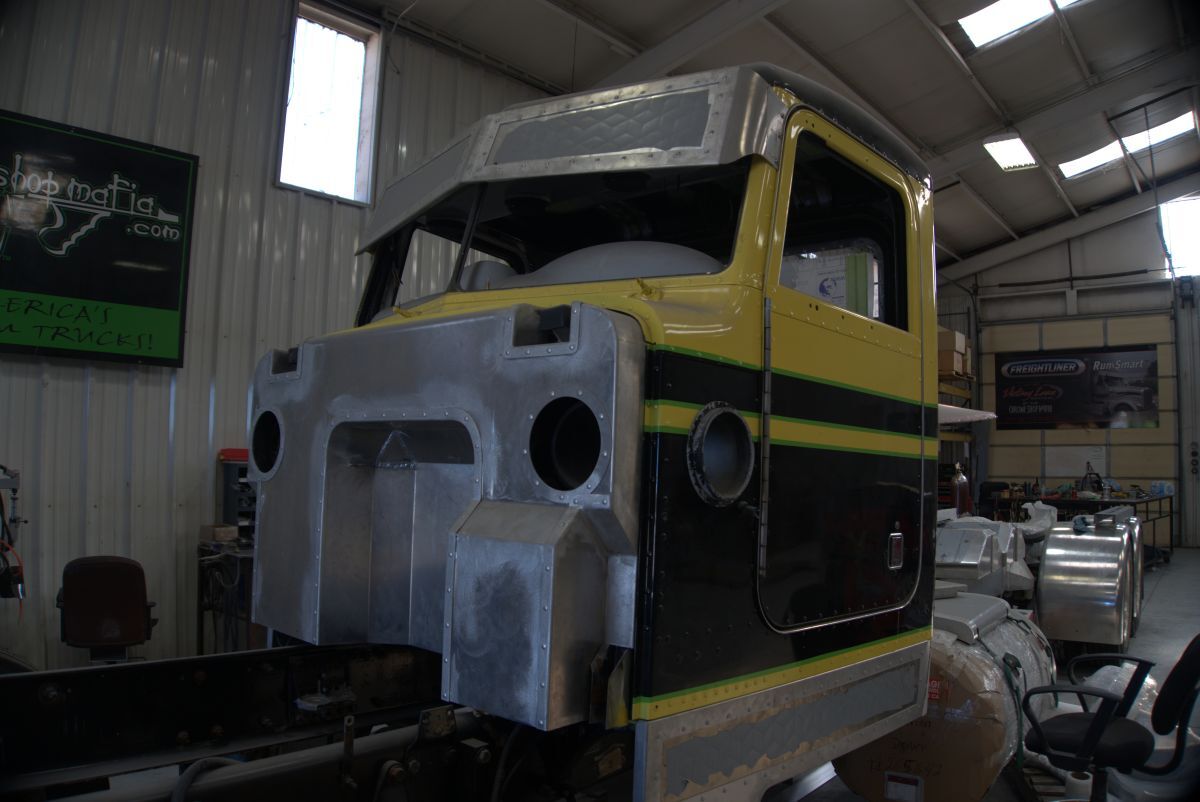
Repair costs scale drastically based on the size of the damage, required structural reinforcements, and total labor hours.
While a minor fiberglass patch might only take a few hours, repairing extensive damage across multiple mounting points can easily require 16 hours or more.
At a standard shop rate of $100 per hour, a 16-hour repair means $1,600 in labor before factoring in fiberglass materials, new inner reinforcements, paint matching, replacement hardware, and the cost of the truck sitting idle in the shop.
Repairability by Hood Material
| Hood Material | Common Repair Method | Main Concern |
|---|---|---|
| Fiberglass | Resin, fiberglass mat, reinforcement, refinishing | Cracks around mounts and supports |
| SMC or molded composite | Material-compatible adhesive and filler | Incorrect products weaken the repair |
| Aluminum | Straightening, welding, or panel replacement | Distortion and metal fatigue |
| Steel | Straightening, welding, and refinishing | Rust and stretched metal |
Average Replacement Costs
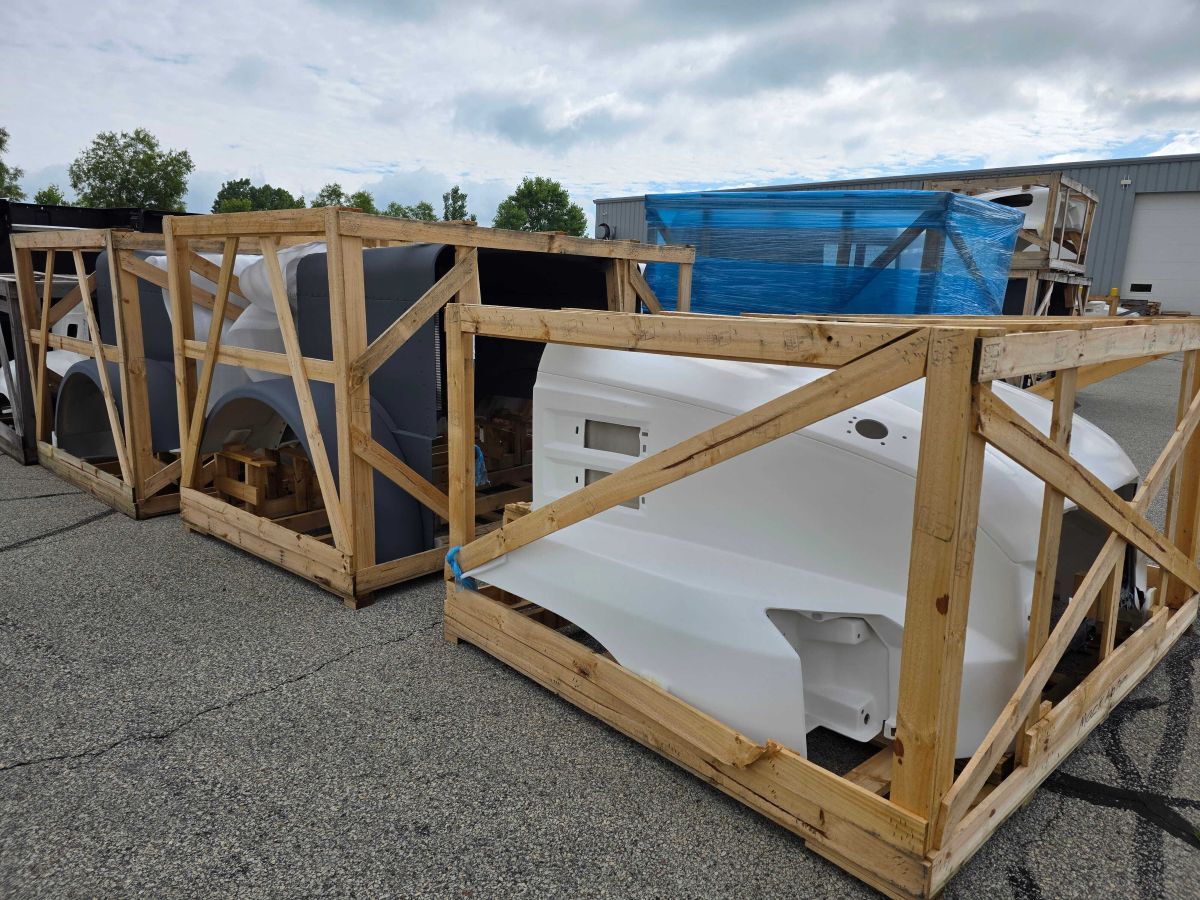

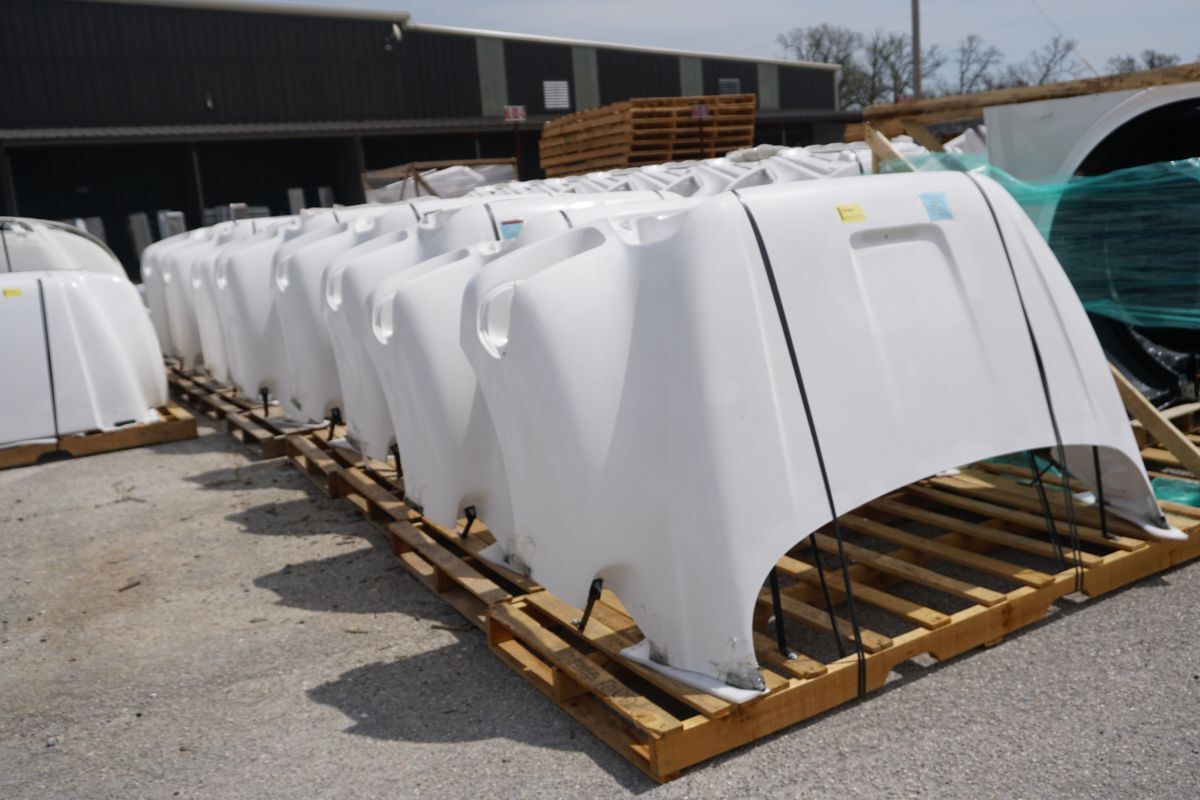
When calculating a replacement, remember that the hood shell is just the starting point. Your final bill will include freight and terminal fees, paint preparation, the labor to transfer existing parts (like grilles, headlights, and mirrors), and alignment work.
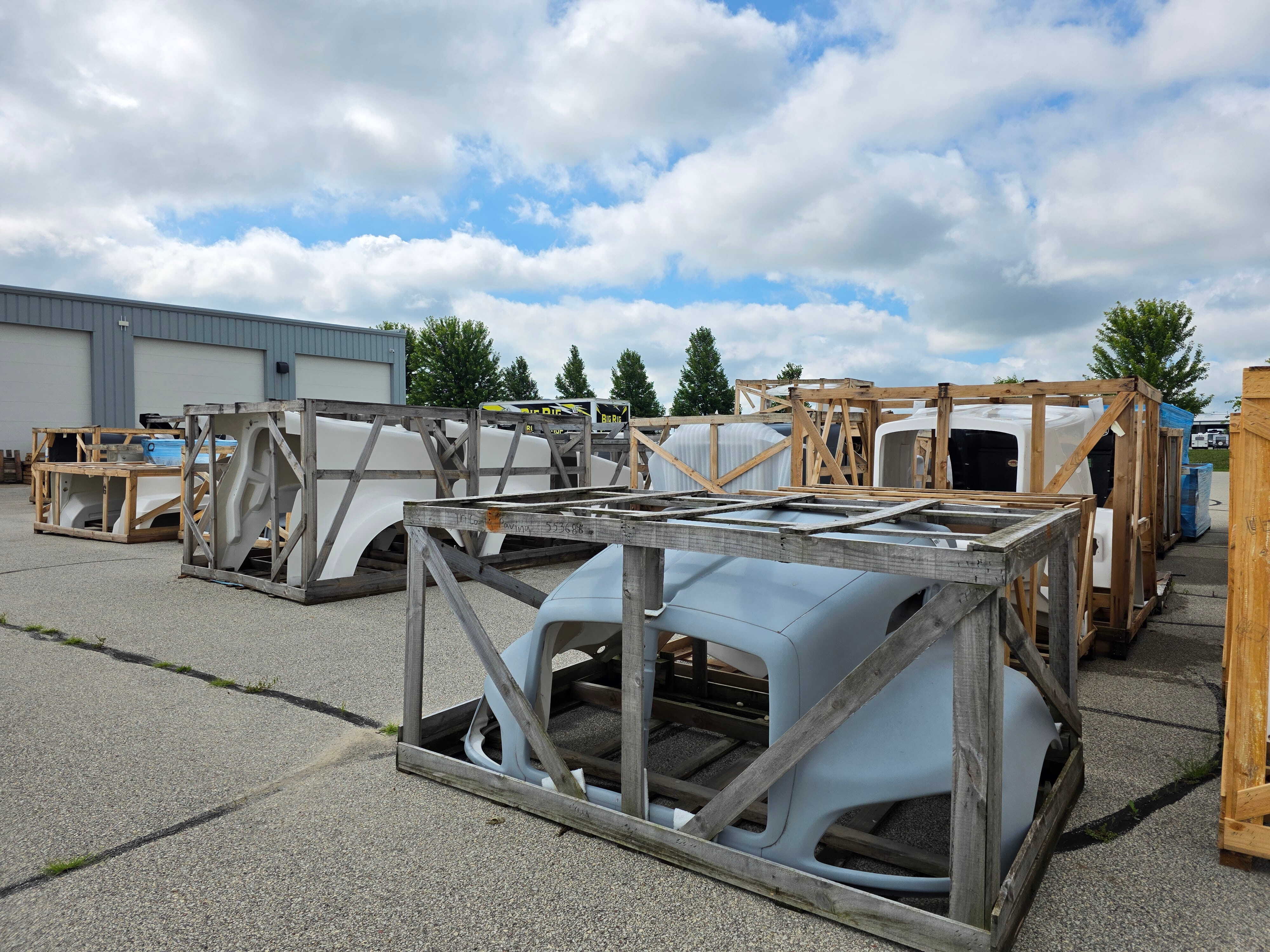
While actual pricing varies by truck model and freight distance, average industry costs typically look like this:
- OEM Hoods: $3,000 to $6,500+
- Aftermarket Hoods: $1,200 to $3,500
- Professional Painting: $800 to $1,100
Repair or Replace Decision Checklist
| Question | Repair | Replace |
|---|---|---|
| Is the damage localized? | Yes | No |
| Are hinge and latch mounts sound? | Yes | No |
| Does the hood align correctly? | Yes | No |
| Is the inner reinforcement intact? | Yes | No |
| Has the repair failed before? | No | Yes |
| Is the fiberglass firm? | Yes | No |
| Does repair cost stay well below replacement? | Yes | No |
| Which option reduces downtime? | Repair | Replacement |
Final Steps: Getting Accurate Estimates
To make an objective decision, request two complete, itemized estimates from your shop.
The repair estimate should break down labor by damaged section, fiberglass materials, reinforcement work, paint, and new hardware (hinges, shocks, latches).
The replacement quote must cover the hood price, freight, paint, installation labor, and the transfer of reusable parts.
Most importantly, both estimates should include a firm completion date so you can calculate your lost net revenue.
To ensure the shop can source the exact replacement hood for an accurate quote, provide them with:
- Truck year, make, and model
- Hood length and BBC (Bumper to Back of Cab) measurement
- Axle configuration (set-forward or set-back)
- Headlight, grille, and fender configurations
Pro tip: Photograph your existing hood and record any molded part numbers or labels on the inside shell. Measuring hinge and latch locations before ordering prevents costly freight returns due to mismatched parts.
Shop Replacement Truck Hoods at Elite Truck Accessories
Shop for make/model-specific replacement hoods for your semi truck, including hood accessories, and replacement hardware parts at Elite Truck Accessories in Dallas, Texas. Call today for more information about specific products.
Recent Posts
-
The Truth Behind Retro Dashboard Conversion for Peterbilt Trucks
 If you thought semi truck day cab conversions were tricky, just wait. Retro front dash conversion k …Nov 25th 2026
-
Kenworth Air Ride Troubleshooting: Cab Bounce, Vibration, and Suspension Problems
 Cab bounce, harsh impacts, and air leaks make long hauls miserable. If you drive a Kenworth W900, T …Nov 13th 2026
-
7 Step Box Installation Mistakes & How to Avoid Them
 In this post, we'll cover 7 common step box installation mistakes that we've noticed over the years. …Nov 6th 2026
-
Semi Truck Day Cab Conversion Guide
 Here's a complete guide on semi truck day cab conversions for standard Class 8 truck models. Key Ta …Nov 2nd 2026
-
Semi Truck Crossmember Replacement & Fitment Guide
 Semi truck crossmembers are metal beams that connect the two frame rails together to stabilize the f …Oct 22nd 2026
-
How to Source the Right Replacement Part After a Collision
Sourcing the right aftermarket post-collision replacement parts depends on how extensive the damage …Sep 22nd 2026 -
Post-Wreck Semi Truck Parts: Navigating Texas Repair & TxDOT Compliance
Here’s a simplified breakdown on post-collision compliance for semi truck owners in the Dallas Fort- …Sep 15th 2026 -
The Hidden Damage You Don't See After a Semi Truck Collision
When a loaded Class 8 tractor-trailer is involved in a collision, impact forces often extend beyond …Aug 31st 2026 -
Semi Truck Front-End Collision Damage: Parts Replacement Guide
 If you’re looking for replacement truck parts after a front-end collision, here’s a helpful guide on …Aug 17th 2026