The Hidden Damage You Don't See After a Semi Truck Collision
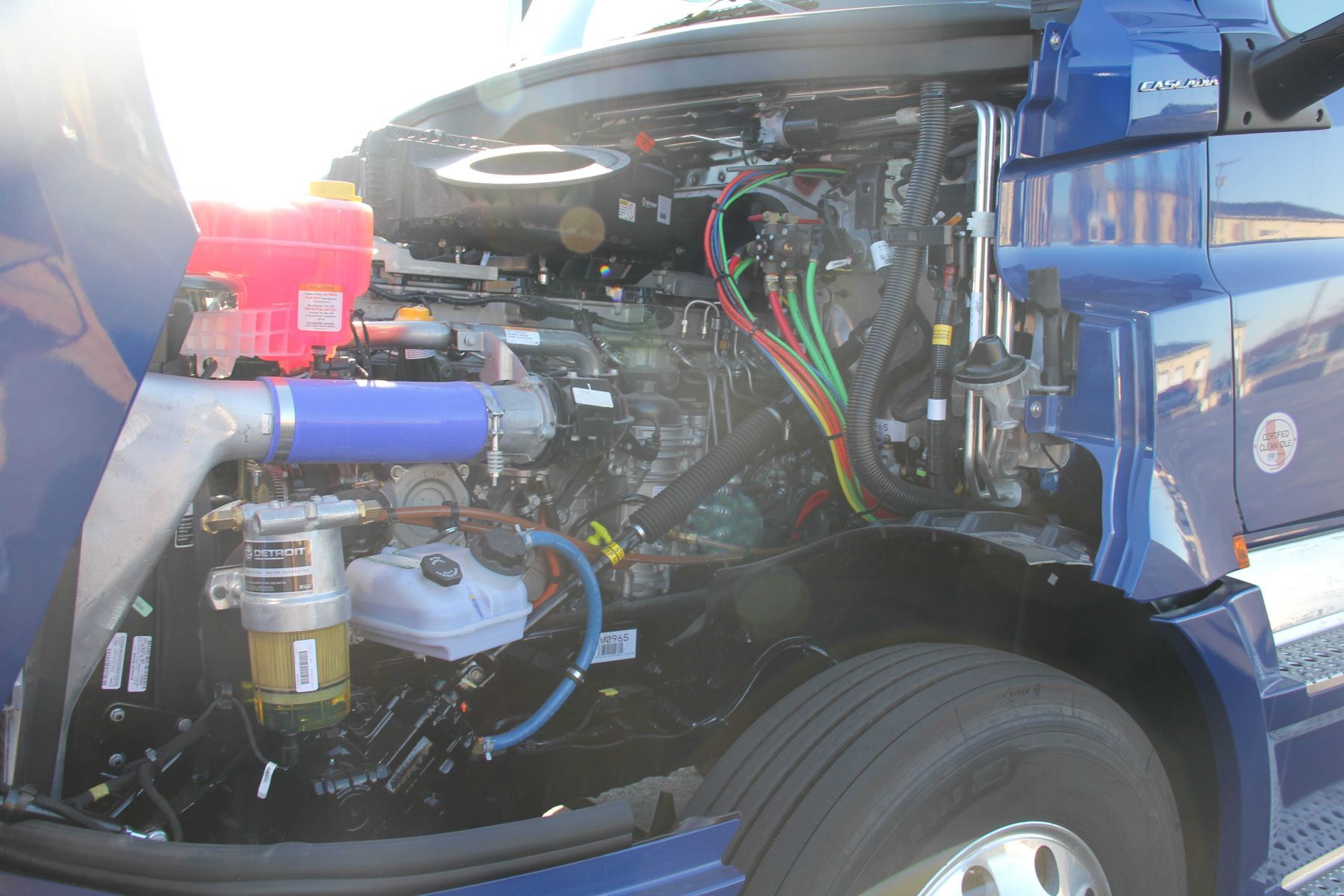
When a loaded Class 8 tractor-trailer is involved in a collision, impact forces often extend beyond the obvious visible body damage.
Undetected collision damage might lead to alignment problems, rapid tire wear, fluid leaks, air loss, electrical faults, poor handling, or component failure after the truck returns to service.
Impact forces follow different load paths based on:
- Impact direction
- Vehicle speed
- Vehicle weight
- Cargo weight and movement
- Point of contact
- Tractor-trailer angle
- Suspension position
- Frame and body attachment points
Damage does not spread evenly through every chassis component.
Parts Damaged by Jackknifing, Rollover, Sideswipe or T-Bone Impact
- Frame and crossmembers
- Steering and suspension
- Wheel ends
- Air brakes
- Fifth wheel and coupling parts
- Cooling and charge-air systems
- Fuel, DEF, and electrical systems
- Cab mounts and sleeper structures
- ADAS sensors
- Trailer body and suspension
According to federal regulations, the frame rails must not be cracked, loose, sagging, or broken, and cab mounting bolts and brackets must remain secure.
They also require the frames, suspension systems, axles, wheels, steering parts, and related safety components to remain in safe operating condition.
Rollover Damage: What Parts to Replace
- Frame twist
- Cab and sleeper deformation
- Cab mount damage
- Fluid migration into places where fluids do not normally sit
- Alignment changes
Engine Hydrolocking
Do not restart an overturned diesel engine until a qualified technician checks the cylinders, intake system, turbocharger, exhaust, oil level, coolant, and fluid contamination according to the engine manufacturer’s procedure.
Liquid trapped above a piston might cause hydrolock and internal engine damage during cranking.
Revise “Diamonding”
Frame diamond refers to unequal diagonal frame measurements. Frame twist, lateral bow, vertical sag, and diamond condition are separate forms of distortion.
Visual inspection alone does not confirm frame alignment. A technician should measure:
- Frame datum points
- Cross-diagonal dimensions
- Wheelbase from side to side
- Axle tracking
- Ride height
- Drive axle alignment
- Pinion angles
Drive axle alignment and pinion angles need to meet the suspension manufacture’s specs.
- Roof structure and windshield opening
- Door openings, hinges, and latches
- Cab air springs, shocks, and height control
- Steering column and steering shaft
- Seat mounts and seat belt anchors
- Battery leakage or internal damage
- Fuel and DEF tank vents
- Wheel-end lubricant migration
- Exhaust and aftertreatment mounting brackets
- Sleeper floor, cabinetry, and bunk restraints
Underride Collisions
Rear Underride Inspection Areas
- Rear impact guard
- Guard uprights and gussets
- Guard-to-chassis attachments
- Rear sill
- Trailer floor crossmembers
- Door frame
- Door hinges and latches
- Rear lighting and wiring
- ABS wiring near the rear axle
- Suspension and slider alignment after a severe impact
Side Underride Inspection Areas
- Lower side rail
- Floor crossmembers
- Landing gear and bracing
- Suspension hangers
- Air lines
- ABS wiring
- Slider rails and locking pins
- Side skirts
- Fuel tanks or toolboxes on applicable equipment
- Refrigeration lines on temperature-controlled trailers
A side underride impact might crush or displace air lines, electrical harnesses, valves, crossmembers, slider rails, or suspension mounts located near the contact area.
Override or Underbody Impact
Front Underbody or Truck-Over-Object Impact
Keep:
- Steering linkage damage
- Oil pan and transmission housing damage
- Low-mounted aftertreatment damage
- Driveline and crossmember damage
The internal DPF or SCR substrate might crack after a hard impact without major exterior deformation. Diagnosis should include fault-code review, sensor inspection, mount inspection, exhaust restriction testing, and the OEM aftertreatment procedure.
TMC lists separate recommended practices for DPF inspection, diagnostics, handling, and cleaning.
Jackknife Impact Parts to Replace
- Fifth wheel top plate
- Mounting plate
- Slider rails
- Mounting brackets
- Pivot pins
- Bracket pin retention bolts
- Lock jaws
- Secondary lock
- Release handle
- Kingpin
- Trailer upper coupler and apron plate
- Frame near mounting points
Inspect the tractor-to-trailer cable, connectors, strain-relief points, cab pass-throughs, harness clips, and nearby wiring for pulled terminals, broken conductors, abrasion, or loose connectors.
- Trailer nose and upper corners
- Cab extenders and mounting brackets
- Exhaust stacks behind the cab
- Sleeper HVAC lines
- Rear-window or sleeper-window bonding
- Cab air suspension
- Fifth wheel slide mechanism
- Frame crossmembers below the fifth wheel
Sideswipe Damage
Fuel and DEF Systems
The fuel tank section is useful but too absolute.
A side strike might damage:
- Tank shell
- Welded seams
- Filler neck
- Cap
- Vent
- Crossover line
- Supply and return lines
- Tank straps
- Rubber isolators
- Mounting brackets
- Steps attached to the tank
- DEF tank and heated DEF lines
Wheel and Hub Damage
Add:
- Tire sidewall and internal belt damage
- Bent rim
- Elongated wheel holes
- Loose studs
- Hub cracks
- Bearing endplay
- Hub seal leakage
- Spindle damage
- Brake rotor or drum damage
- ABS tone ring and wheel-speed sensor damage
- Steer axle or drive axle misalignment
Federal rules prohibit cracked wheels, broken wheels, elongated bolt holes, and loose or missing wheel fasteners.
Door and Mirror Damage
A mirror strike might distort the mirror reinforcement, door shell, hinge pillar, hinge mounts, latch area, wiring, or window regulator attachment points.
Inspect door opening dimensions and verify smooth latching. Federal regulations require cab doors to open and close properly
T-Bone or Direct Side Impact
- Lateral frame movement
- Driveshaft damage
- Battery box and air tank damage
- Cab and door deformation
- Wiring damage
Frame and axle measurements must return to the truck manufacturer’s published dimensions and tolerances.
DriveShaft Damage
Inspect:
- Driveshaft tube
- Weld yokes
- Slip joint
- Universal joints
- Center bearing
- Transmission output
- Differential input yoke
- Driveline angles
- Pinion angle
- Crossmember mounts
Battery and Electrical Section
Battery acid applies mainly to vented or flooded lead-acid batteries. Battery construction varies.
Inspect:
- Battery cases
- Hold-downs
- Cable insulation
- Terminals
- Fuse and power distribution boxes
- Ground straps
- Harness routing
- Air tank brackets
- Tank drain valves
- Air fittings
- Nearby frame corrosion protection
For hybrid or battery-electric commercial trucks, side impacts also require high-voltage isolation and battery enclosure procedures from the OEM.
Head-On or Front-Corner Impact
This section needs the largest expansion.
Cooling Stack
Keep the radiator, charge-air cooler, and condenser discussion. Replace “massive loss of turbo boost” with “low boost, poor power, higher fuel use, or fault codes.”
A complete inspection should include:
- Radiator
- Charge-air cooler
- A/C condenser
- Transmission cooler
- Cooling module brackets
- Fan shroud
- Fan blades
- Fan clutch
- Charge-air boots and clamps
- Coolant hoses
- Air intake ducts
- Front engine accessories
TMC maintains separate guidance for radiator integrity, charge-air cooler design and testing, heat-exchanger maintenance, cooling hoses, clamps, and fittings.
Structural and Mechanical Additions
- Bumper brackets
- Tow hooks and tow-hook mounts
- Frame horns
- Hood hinges and pivots
- Hood latches
- Front crossmember
- Steering gear
- Steer axle
- Springs and U-bolts
- Engine mounts
- Transmission mounts
- Belt drive
- Front wiring harness
- Headlight mounting panels
- Windshield and cab opening geometry
- Seat belts and restraint components
Avoid saying engine mounts “frequently” shear unless repair records support the frequency claim.
ADAS Gap
Modern semi trucks often place radar behind or near the bumper. Cameras often sit behind the windshield.
Bendix states radar issues sometimes follow a collision or improper installation after repair.
The radar bracket and chassis mounting surface require inspection.
ZF states service alignment is required after repairs affecting chassis parts, steering, suspension, tires, windshields, radar, cameras, or front body components.
- Radar bracket inspection
- Camera inspection
- Side-radar inspection
- Fault-code scan
- Radar and camera alignment
- Steering-angle sensor calibration
- Yaw-rate and stability-system diagnostics
- Road test according to system manufacturer procedures
Rear-End Impact
Separate trailer rear impact from tractor rear impact.
Trailer Rear Impact
Any impact deformation, cracked coating, displaced bracket, torn fastener, or distorted weld area requires inspection under the guard manufacturer’s repair or replacement criteria.
Inspect:
- Rear impact guard
- Guard attachments and gussets
- Rear sill
- Door frame
- Hinges
- Lock rods
- Door seals
- Threshold
- Floor crossmembers
- Roof-to-sidewall joints
- Rear corner posts
- Lighting
- ABS wiring
- Slider rails
- Suspension alignment
- Reefer door sealing and insulation
Use “rear impact guard,” not “ICC bumper,” in technical sections. ICC bumper remains common shop slang, but current federal sources use rear impact guard.
Tractor Rear Impact
When the tractor is struck while disconnected from a trailer, inspect:
- Fifth wheel
- Fifth wheel slider
- Frame rails
- Rear crossmember
- Suspension
- Drive axles
- Mudflap brackets
- Tail lighting
- Deck plates
- Air and electrical connections
Post Collision Inspection Checklist (Revamped)
Record the Collision Conditions
Document:
- Direction of impact
- Point of contact
- Truck and trailer position
- Cargo weight
- Vehicle weight
- Rollover direction
- Whether the engine continued running
- Tow and recovery methods
Perform a No-Start Safety Assessment
Before starting or moving the truck, inspect for:
- Fuel leaks
- DEF leaks
- Coolant or oil loss
- Loose hood, cab, or body panels
- Wheel or tire interference
- Steering disconnection
- Air system damage
- Damaged batteries
- High-voltage hazards
- CNG or LNG system damage, where applicable
Complete Pre-Repair Diagnostics
- Record all fault codes
- Save freeze-frame and event data where supported
- Test battery voltage
- Check J1939 communication
- Inspect radar and camera faults
- Document warning lights before disconnecting batteries
Measure Structure and Alignment
- Frame datum measurements
- Cross-diagonal measurements
- Cab opening dimensions
- Wheelbase comparison
- Steer axle alignment
- Drive axle tracking
- Trailer axle alignment
- Ride height
- Pinion angle
- Fifth wheel position
Inspect Every Safety System
CVSA Level I inspections include brakes, coupling devices, driveline, exhaust, frames, fuel systems, steering, suspension, tires, wheels, rims, hubs, lighting, and trailer bodies.
A collision inspection should include all these areas plus model-specific structural measurements and electronic diagnostics.
Perform System Tests
Depending on impact location:
- Air brake leak and function test
- ABS and stability-system test
- Cooling-system pressure test
- Charge-air cooler leak test
- Fuel and DEF leak test
- Wheel-end inspection
- Fifth wheel lock inspection
- Driveline runout and angle checks
- Electrical load and network tests
Complete Post-Repair Verification
- Final wheel and axle alignment printout
- Final frame measurements
- ADAS calibration
- Fault-code scan
- Air leak test
- Fluid leak inspection
- Fifth wheel coupling test
- Road test
- Reinspection after road test
- Repair records and measurement documentation
TMC RP 1609 recommends a structured, repeatable quality-control process to verify serviced vehicles are ready for operation after a repair.
Shop for Aftermarket Repair & Replacement Truck Parts
Let Elite Truck Accessories in be your one-stop-shop in Dallas, Texas, for finding post-collision repair truck parts for your fleet.
Recent Posts
-
The Truth Behind Retro Dashboard Conversion for Peterbilt Trucks
 If you thought semi truck day cab conversions were tricky, just wait. Retro front dash conversion k …Nov 25th 2026
-
Kenworth Air Ride Troubleshooting: Cab Bounce, Vibration, and Suspension Problems
 Cab bounce, harsh impacts, and air leaks make long hauls miserable. If you drive a Kenworth W900, T …Nov 13th 2026
-
7 Step Box Installation Mistakes & How to Avoid Them
 In this post, we'll cover 7 common step box installation mistakes that we've noticed over the years. …Nov 6th 2026
-
Semi Truck Day Cab Conversion Guide
 Here's a complete guide on semi truck day cab conversions for standard Class 8 truck models. Key Ta …Nov 2nd 2026
-
Semi Truck Crossmember Replacement & Fitment Guide
 Semi truck crossmembers are metal beams that connect the two frame rails together to stabilize the f …Oct 22nd 2026
-
How to Source the Right Replacement Part After a Collision
Sourcing the right aftermarket post-collision replacement parts depends on how extensive the damage …Sep 22nd 2026 -
Post-Wreck Semi Truck Parts: Navigating Texas Repair & TxDOT Compliance
Here’s a simplified breakdown on post-collision compliance for semi truck owners in the Dallas Fort- …Sep 15th 2026 -
Semi Truck Hood Damage: When to Repair vs. Replace
 A damaged semi-truck hood immediately halts your revenue stream, forcing a critical decision between …Aug 24th 2026
-
Semi Truck Front-End Collision Damage: Parts Replacement Guide
 If you’re looking for replacement truck parts after a front-end collision, here’s a helpful guide on …Aug 17th 2026